
Small Daily Habits for Healthier Leg Veins
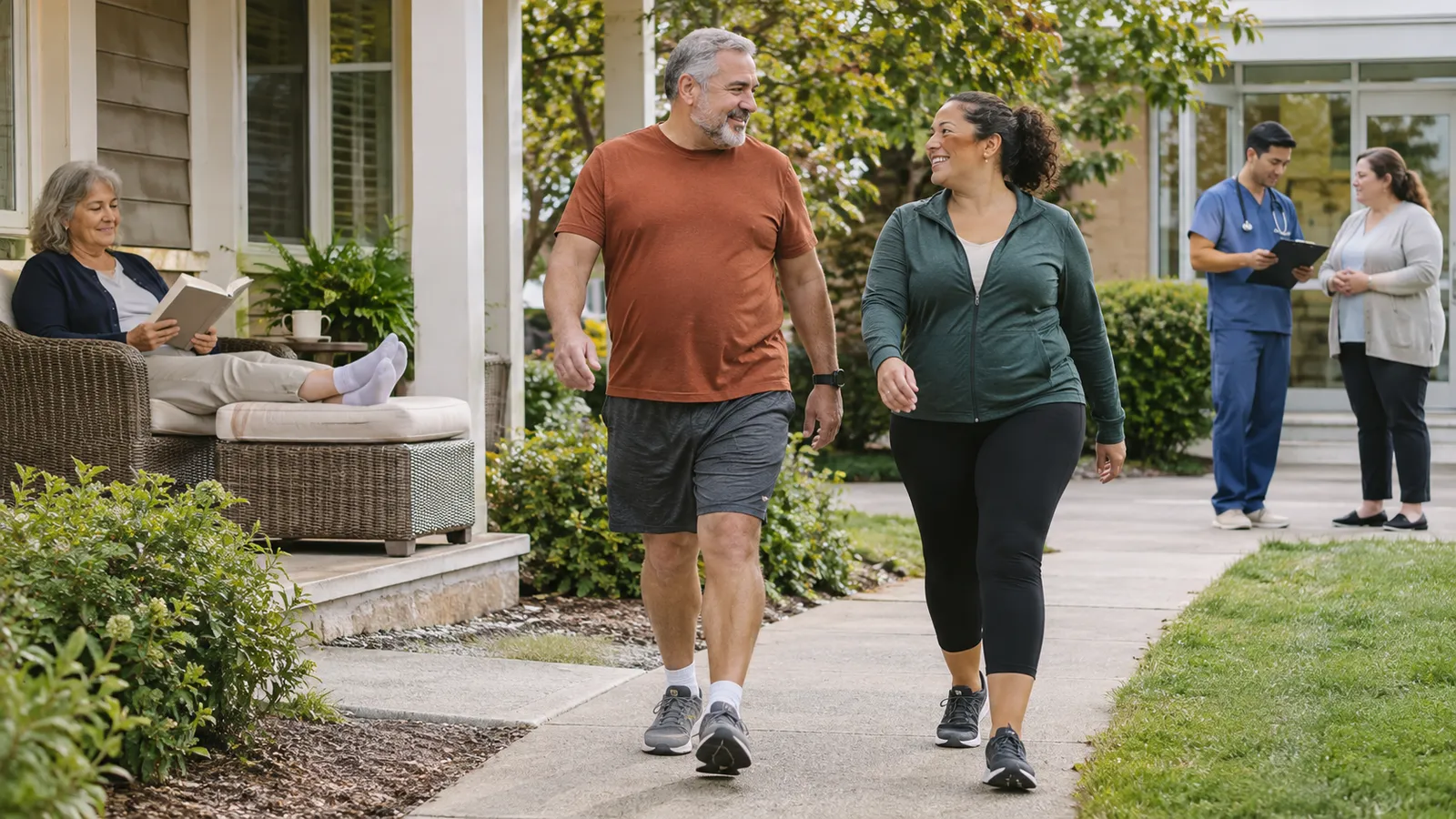
Leg health habits are the everyday routines that sit alongside any vein care, such as how much you move and how much weight your legs carry. The usual advice is to move more, and Sigvaris puts it this way: "Frequent moderate physical exercise (examples: walking, swimming, hiking) is important to maintain healthy legs and an overall healthy lifestyle."
That advice is sound until it meets a second constraint, such as extra weight or a long day on your feet. At that point a plain "move more" needs a plan behind it. The same site also keeps a page of leg health tips if you want a second list to compare with.
Two complications, simplest first
The shelf holds two articles, ordered by how much they ask you to untangle.
- Walking as a Workout for the Calf Pump starts with the simplest habit and asks what a walk has to do to count.
- How Extra Weight Adds Pressure to Leg Veins adds a second constraint, because weight and movement tend to arrive in the same life.
Clinician-facing references cover the condition behind these habits. The MSD Manual Professional Edition has an entry on chronic venous insufficiency and post-thrombotic syndrome, and the NHS overview of varicose veins gives a general overview.
What each habit costs your week
Every habit asks for time and effort that you are also spending on work and family. The useful question is rarely which habit is best in theory. It is which change fits your week and still holds when the week gets hard.
The NHLBI page on varicose veins is a further reference for readers who want a national health agency's view of the condition.
Pick the article that matches your constraint
If your problem is finding time to move, begin with the walking article. If weight is part of your picture, begin with the weight article. Either way, take your own situation to a clinician, and keep in mind that this guide is general information for readers in Clifton and nearby towns, not medical advice.